Twitter

Monday, April 29, 2013

OBSERVING REPORT APRIL 28, 2013

Location:  Little Lepreau Basin, Little Lepreau, New Brunswick

Date Time:  April 28, 2013 2100-2330hrs

Weather:  At sundown temp was 15 degrees Celsius, at 2330hrs temp was 2 degrees Celsius, clear, no wind, excellent viewing.  There was frost on the vehicles the next morning.

Attendance:  Myself

Equipment:  Canon Rebel DSLR with 18-55mm and 75-300mm lenses, 20x80 binoculars, 8" Meade LX200 telescope with 32mm eyepiece, tripods for telescope and binos.

Objectives:  To capture Comet PanStarrs in an image through telescope.  Capture images of M52, M103, M76, and M34 which, along with PanStarrs are all in or around Cassiopeia which was in NNW sky at sundown.

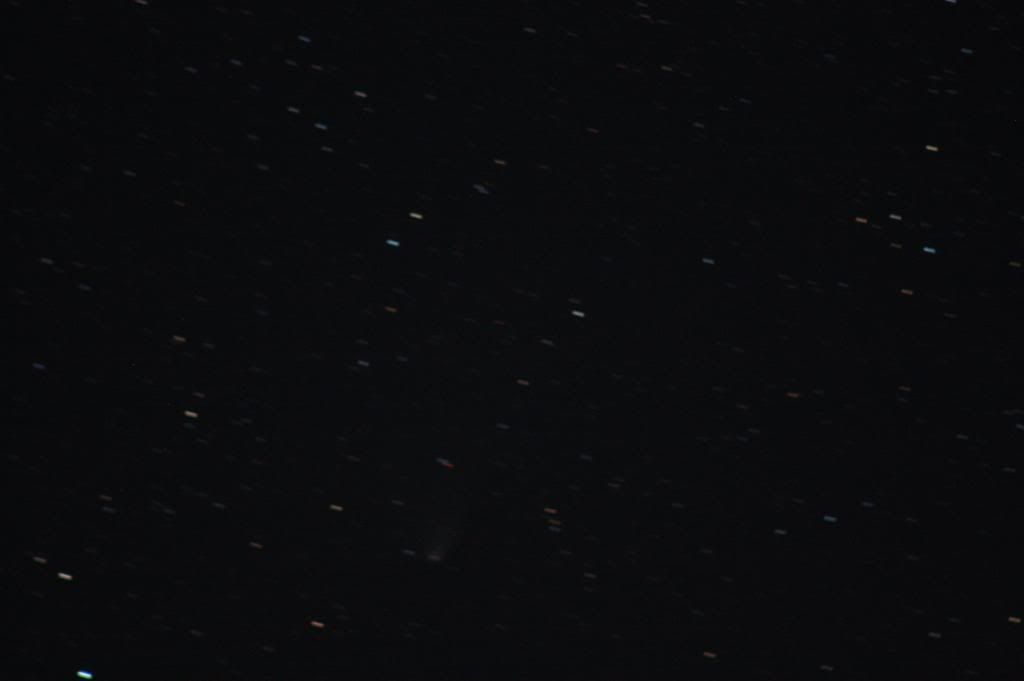
Report:  None of the objectives were met.  Did get an image of PanStarrs (image can be seen below report)with camera and 75-300mm lens attached piggyback to the scope, but it did not turn out well because of poor focus.  Could not find the comet through the scope, although many attempts were made. 

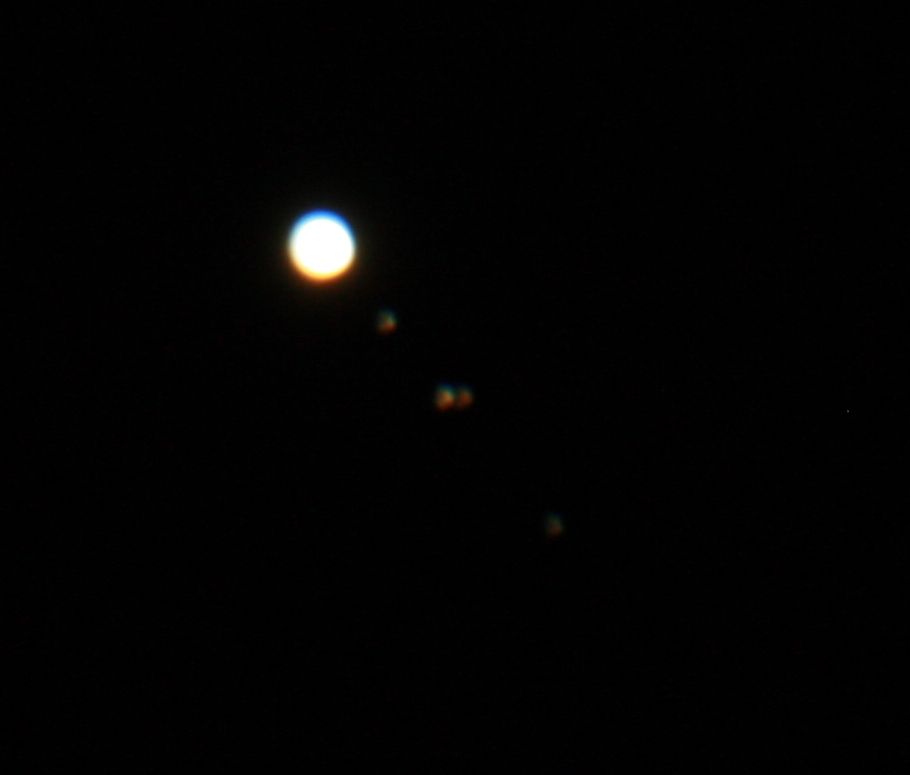
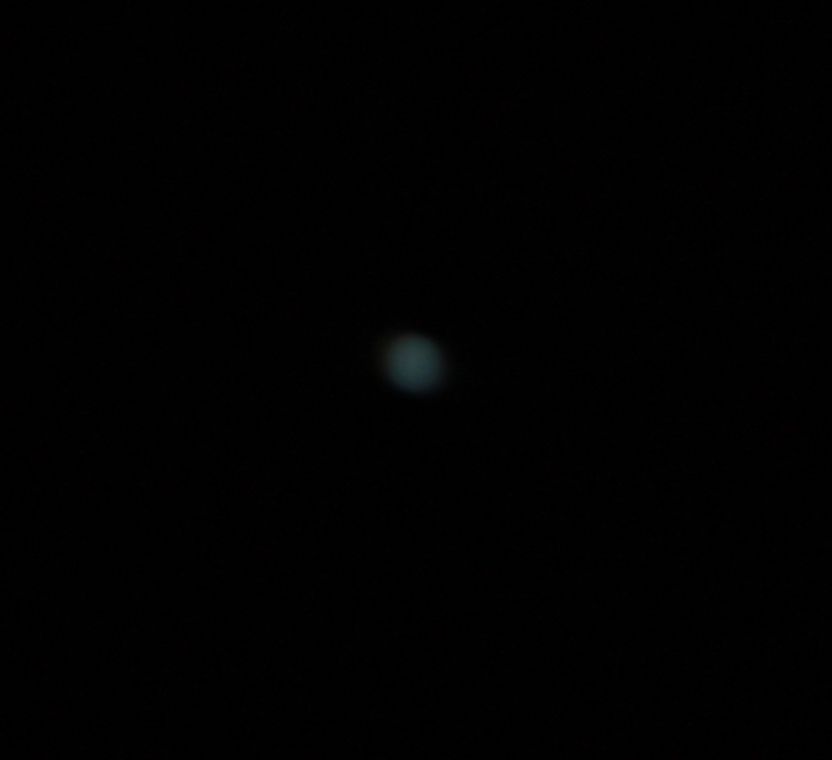
Viewed Jupiter, which was low in the western sky at sundown, first through telescope.  All 4 of its visible moons were on the left side of the big planet, with two of them very close.  After the search for PanStarrs, images were taken of Jupiter.

It must be noted that there was trouble with the GoTo function on the telescope.  After aligning the scope on Betelgeuse, the keypad said that Jupiter was below the horizon.  Tried aligning on Polaris with the same result.  At this point, the telescope was then pointed manually, with the keypad, so that the tracking could be used.  This was the first time that Jupiter could not be found with the GoTo.  Tracking did allow for images of the stars, even long exposure shots through telescope, although there were star trails in the images.

It also must be noted that there was something walking through the woods, behind the old house.  Might have been a deer or moose...

This site was chosen because of its decent view of the western sky and its dark skies, but it has many down sides. There is usually a strong wind coming off the water, frequently cars will drive up and turn around with high beams gleaming.  Even though this is a dead end road, there is frequent car traffic.  Finding a good observing site, where there is little or no car traffic, dark skies, and a good view of the whole sky seems to be a challenge in itself.

Getting back to observing;  The tripod mounted binoculars were used in an attempt to find the objective Messier objects.  Did view a cluster of stars to the west of where I thought M103 should be.  Could not confirm it was the open star cluster M103.  None of the M objects could be confirmed.  Jupiter and four of its moons were viewed.

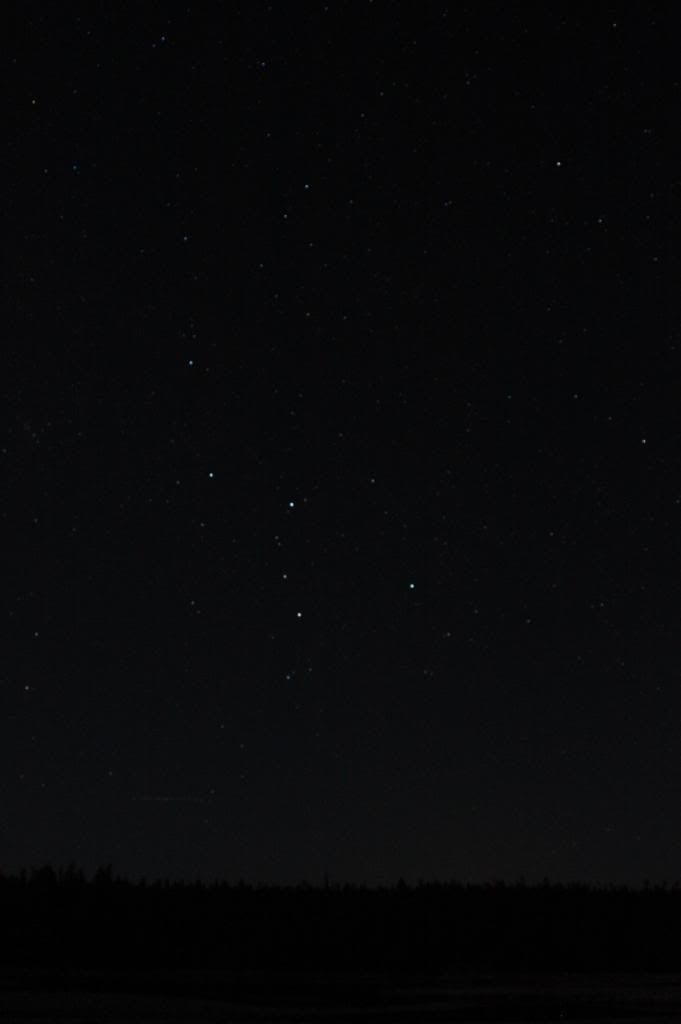
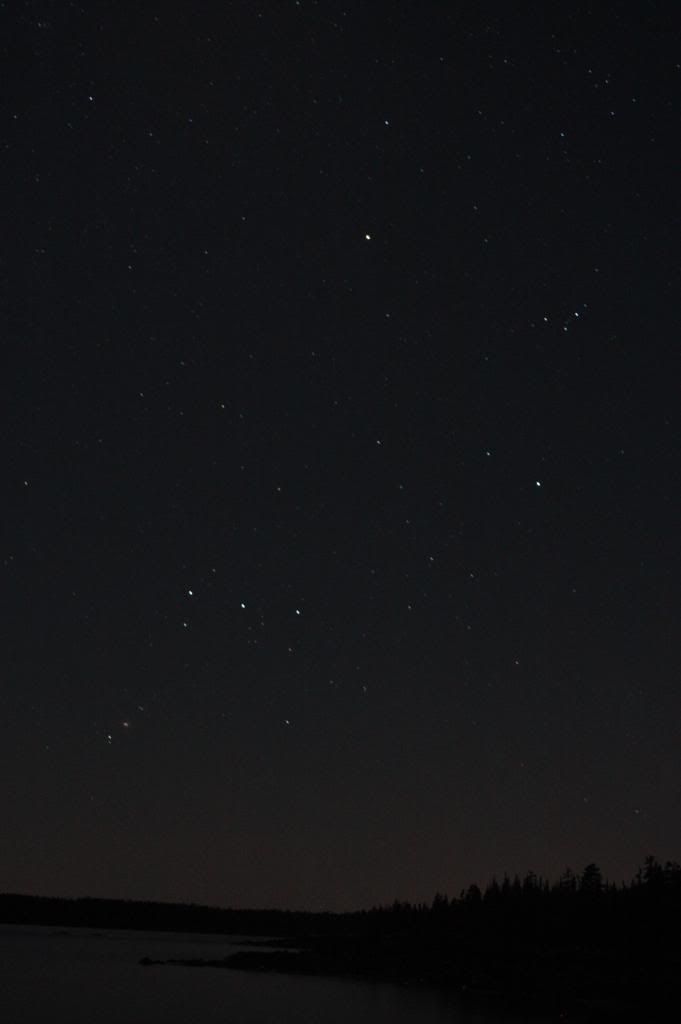
Two shooting stars were seen around PanStarrs at about the same height in the sky going from North to West.  A satellite, going from West to East, was observed going across the Big Dipper, which was high and upside down, about an hour after sundown.
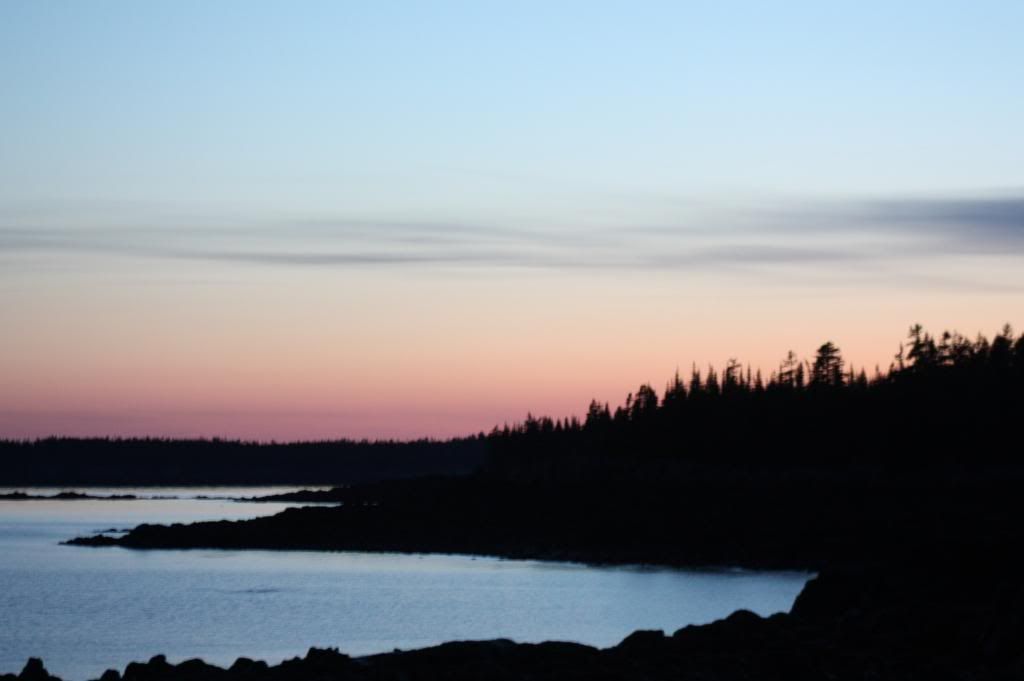
Observing site at sundown.  April 28, 2013 2121hrs

Jupiter and four of its moons.  April 28, 2013 2305hrs

Comet PanStarrs( low near center left of image) April 28, 2013 2137hrs


Sunday, April 28, 2013

BAY OF FUNDY TIDES

Location:  Pocologan, NB


April 27, 2013 Low Tide 0648hrs


April 27, 2013 Low Tide 0648hrs


April 27, 2013 Rising Tide 0830hrs


April 27, 2013 Rising Tide 0830hrs

April 27, 2013 High Tide 1227hrs

April 27, 2013 High Tide 1227hrs

Saturday, April 27, 2013

OBSERVING APRIL26/27,2013

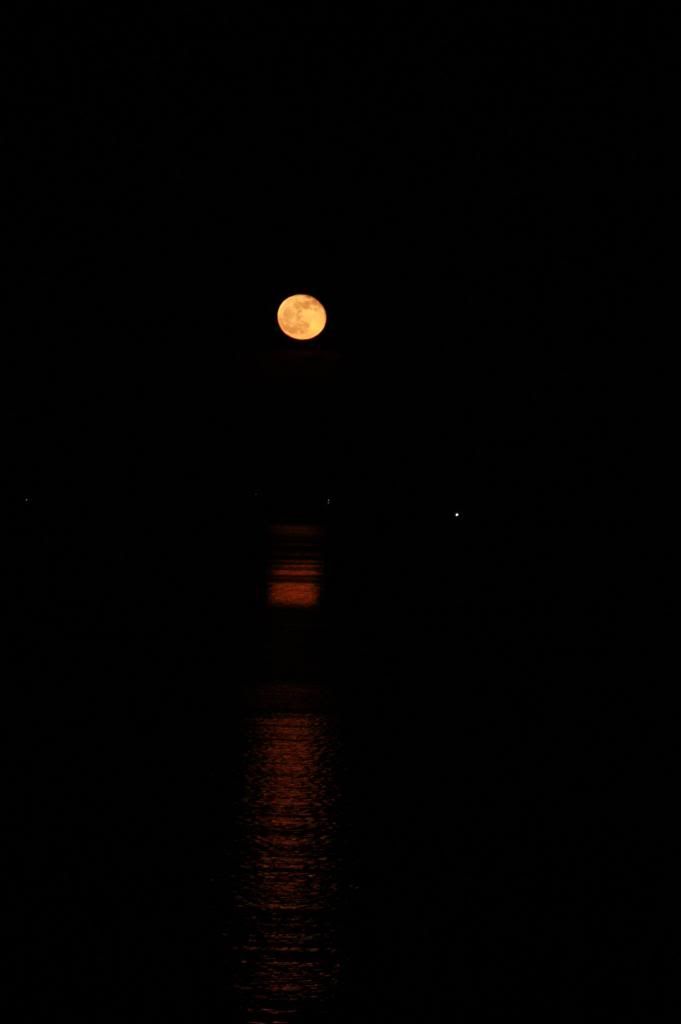
Moon 97.8%Full April26, 2013 2230hrs

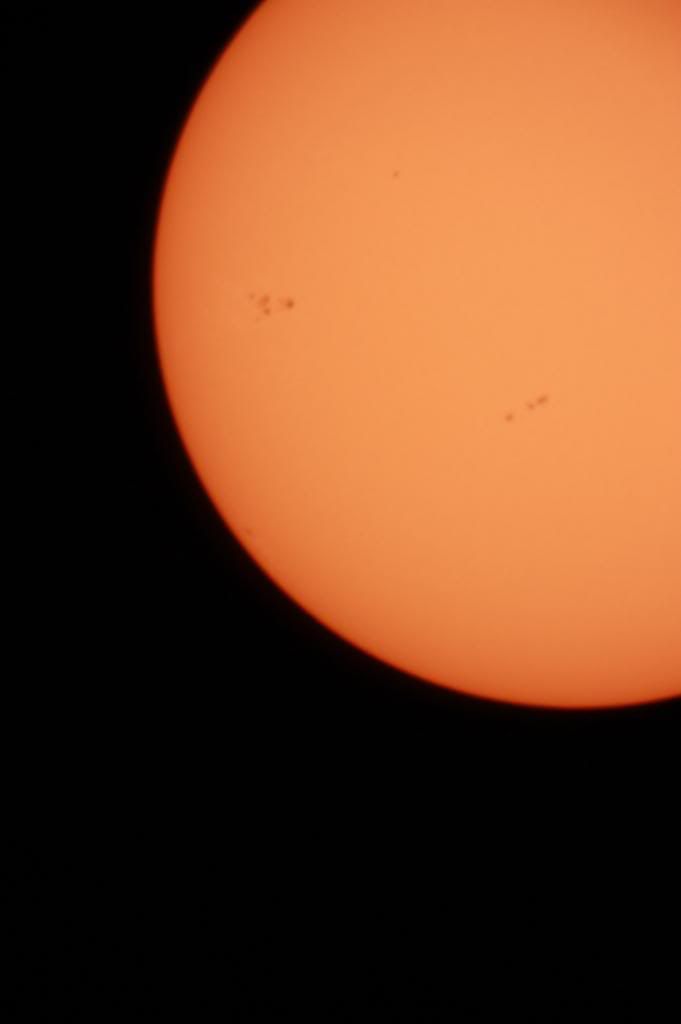
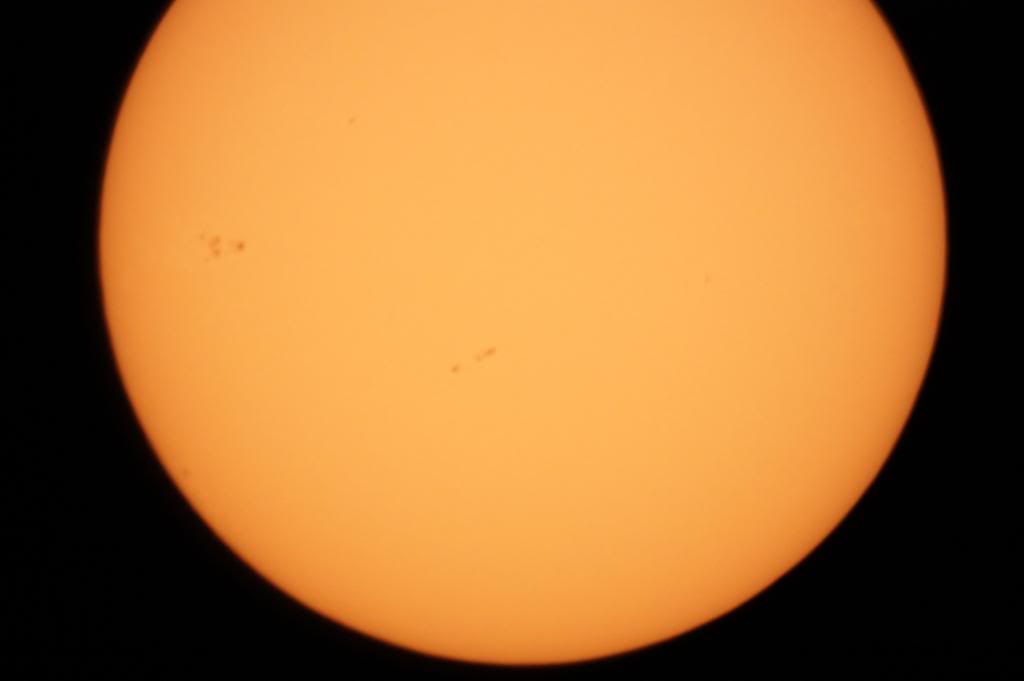
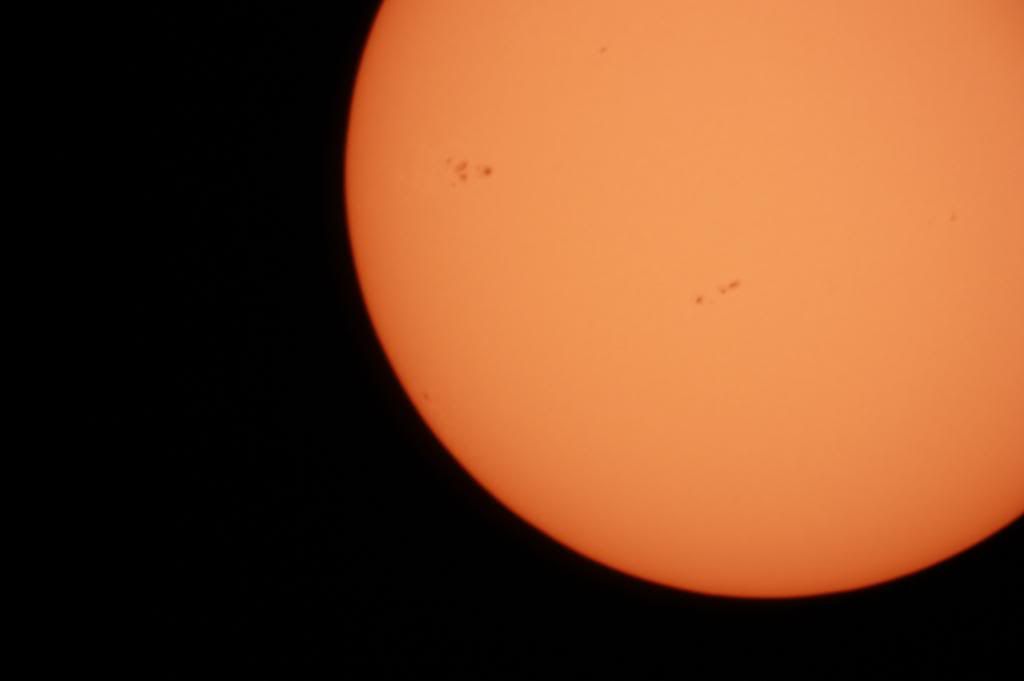
Sun April27, 2013 0830hrs  Sunspots 1731(triangle shape), 1728 and1730


Thursday, April 18, 2013

APRIL 2013 OBSERVING IMAGES


Jupiter April 11, 2013 2119hrs
Jupiter with two of its moons behind it. April 11, 2013 2125hrs


Comet PanStarrs in Cassiopia April 17, 2013 2235hrs
Jupiter in Taurus April 17, 2013 2225hrs
Cassiopia April 17, 2013 2230hrs

Orion over Bay of Fundy April 17, 2013 2217hrs

Jupiter in Taurus April 17, 2013 2223hrs
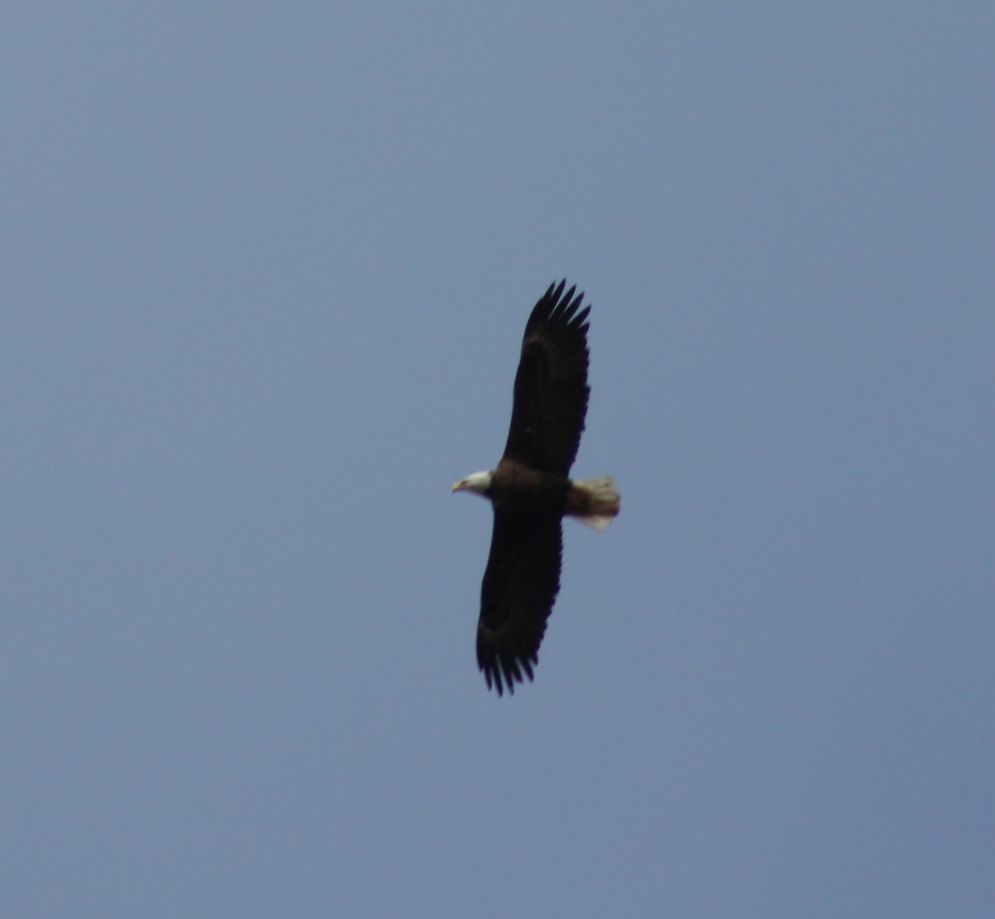
Eagle April 15, 2013 over the Bay of Fundy

Tuesday, March 19, 2013

OBSERVING REPORT MARCH 18, 2013

Location:  Little Lepreau, NB, Canada

Date Time:  March 18, 2013 2000-2110Hrs

Weather:  -7 degrees Celsius, variable clouds, moderate wind.

Attendance:  Brandon, Myself.

Equipment:  Tripod, 20x80 Binos, Canon Rebel DSLR camera with 18-55mm and 75-300mm lenses.

Report:  Searched for Comet Panstarrs with binos from 2000-2035hrs with no luck.  Brandon and I viewed Jupiter and its four moons with binos.  Io was right next to the big planet and was suppose to transit Jupiter from 2228-2439hrs, later in the evening.  This would have put Ios' shadow on Jupiter at around 2343hrs!  This according to the Saint John Astronomy Club website http://www.sjastronomy.ca/whatsup/images/wu2013-03.pdf

We then observed the Moon with binos.  Moon was one day before 1st Quarter.  Much detail could be seen especially around terminator.

After doing one last search for the comet with the binos, to no avail, decided it was time to try some time exposure images with camera.  Tried a few 20 second exposures at low magnification with the 18-55mm lens and no comet could be seen.  Then attached the 75-300mm lens at around 2050hrs.  By this time it was mostly dark and it was known that the comet should be just north of where the sun went down.  Sure enough, there it was!  Could just make it out with averted vision through the camera with the large lens set to high magnification.  It was just above the trees and heading down fast.  At no time in two observing sessions has this comet been naked eye visible to this observer.

No shooting stars or satelites were seen during this observing session.  One huge fireball was seen earlier in the day on my way home from work at 0400hrs.


Comet PanStarrs


Comet PanStarrs


Moon-Jupiter-Aldebaran conjunction.  Moon is one day before 1st quarter Moon.

Search of the western sky for Comet Panstarrs
Cassiopeia and M31

Friday, March 15, 2013

COMET PANSTARRS (C/2011 L4) OVER NOVA SCOTIA

Location:  North Sydney, Nova Scotia  Ferry Terminal

Date Time:  March 14, 2013 1930-2030hrs

Weather:  Clear, slight breeze, 7 degrees Celcius.

Attendence:  Myself

Equipment:  Mounted Canon Rebel DSLR with 18-55mm and 75-300mm lenses.

Report:  Have been following reports on Comet Panstarrs through SpaceWeather.com and Astronomy.com for the last couple of weeks.  The Comet has only been visible in the Southern Hemisphere up until about March 8/13 when it crossed the plane and started to become visible from the Northern Hemisphere.  According to reports, the comet was suppose to make a spectacular conjunction with a thin crescent Moon on March 13/13  but, alas, the weather was terrible for the whole east coast all the way to Ontario!  This would have made an awesome picture, but that's observing!  We cannot control the weather.  Its doubly tragic, because a  conjunction like that may not happen again in our lifetime.  From the places around earth where the weather cooperated, there were reports that the comet had not yet become visible to the naked eye, just in binos, telescopes and time exposure shots through cameras.  This information was important for this observing session, because it was then known that the comet may not be naked eye visible.  Very good to know!

Note:  The official name of Comet Pan-Starrs is C/2011 L4.  C means that the comet is not periodic(not going to return within 200 years)  the 2011 is the year it was discovered...the L signifies the month in 2011 it was discovered(months are divided into two so Jan would be AB, A being the first half of the month, B being the second half)  so this make Pan-Starrs discovered during the second half of June, 2011.  The 4 signifies the number of comets discovered during this half month...so this would make Comet Panstarrs the 4th comet discovered during the second half of June, 2011 and it will not be returning within 200 years.  Obviously they are doing this because so many comets are being discovered now, with the amazing ability of amature astronomers getting better all the time.  If interested check out this website http://www.minorplanetcenter.org/iau/lists/CometResolution.html this is the site that I referenced for comet naming.

Knowing that the comet was probably not going to be visible, I captured many images of the western sky with time exposure shots hoping to pick up the comet but didn't see it immediately in the camera view screen.  The comet didn't show up until after 2010hrs in an image, that's when I first saw it and that was my first time ever capturing an image of a comet!  This after many years of trying!  Once located, the higher magnification was possible which really brought out the comet in the images, but by this time the comet had gone down behind a tree.  After all the images were downloaded on the computer, it was seen that the comet showed up on a bunch of images, but very faintly.  At no time during this observing session was the comet visible to the naked eye, although, with the massive amount of light pollution from the ferry terminal, it was highly unlikely to see it naked eye.  Actually, at the time of writing this report(March18,2013) the comet has only very rarely been reported to have been seen naked eye, which means that one still needs a telescope, binos or long exposure shot to see it.


Tuesday, February 12, 2013

CLEAR SKIES!!!! WARM TEMPS!!!! NO HURRICANES!!!!

OBSERVING REPORT

DATE TIME: Feb 10, 2013 1800-1830hrs AST

LOCATION:  Little Lepreau Basin, Little Lepreau, NB, Canada

WEATHER:  Clear, -7 degrees Celcius, slight breeze.

EQUIPMENT:  Mounted Canon Rebel Xsi DSLR camera with 18-55mm and 75-300mm adjustable lenses.

ATTENDANCE:  Myself

REPORT:  Heard through spaceweather.com that Mercury was going to be at its best elongation at around the date of this report.  The weather has been absolutely terrible for observing for most all of the winter, so was amazed and pleased when the weather warmed up (relatively), and skies cleared with very little wind, and actually had time off work to get out and do some observing without my canoe flying at me in 100km/hr winds.

Sure enough, went down to the end of my drive-way and there was Mercury, low in the west at around 1800hrs with the twilight sky still fairly bright.  By the time the camera was set up, on the garbage bin, the sky darkened just enough that another faint 'star' appeared directly below Mercury.  Later discovered that this faint 'star' was Mars.

This was the first time for my new Canon Rebel Xsi.  Its much newer than the old Canon Rebel, and what really sets the new one apart is the digital view screen.  This makes focusing much easier, and it shows in the images.

No satellites or shooting stars were seen during the reporting period.


Image taken with Canon Rebel Xsi DSLR set to 20 second elapsed time, focal length 39mm, ISO 1600.

Image taken with Canon Rebel Xsi DSLR set to 5 second elapsed time, focal length 220mm, ISO 100.

Followers

Blog Archive