Twitter

Wednesday, April 23, 2014

COMET LOVEJOY DEC 12/2013

Here are some images that Ed O and I took during an early morning observing session on December 12, 2013.


Sunday, November 24, 2013

OBSERVING REPORT

Location:  Little Lepreau, New Brunswick, Canada

Date Time:  November 23, 2013 1730-2000 hrs

Weather:  Windy, 0 degrees Celsius, clear

Attendance:  Becky L, Jessica K, Carla M and Myself

Equipment:  Meade LX 200 8"  Telescope, 2x Barlow, 32 mm eyepiece, CT 3000 Planetary Imager, Canon Rebel DSLR camera with 18-55 mm and 75-300 mm lenses.

Objective:  To view and image Venus and to show Becky and Jessica that Venus appears in phases like the Moon.

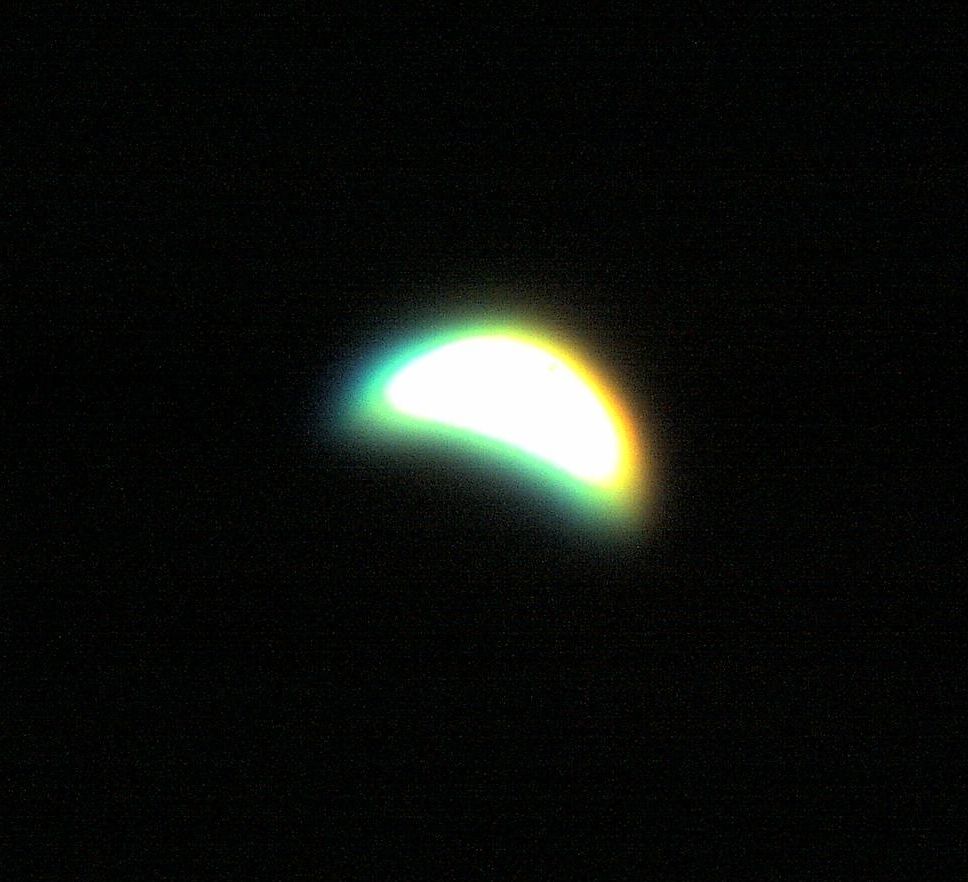
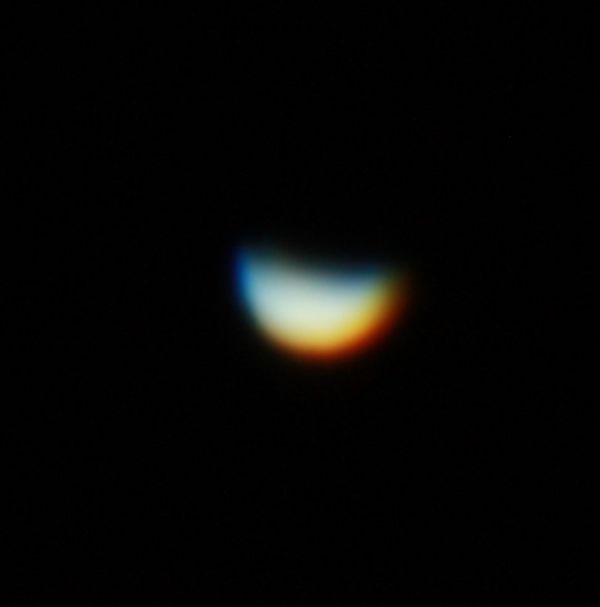
Report:  Started out in the twilight, just after sundown.  Venus shown brightly in the SW.  Set the scope up and with the 2" 32 mm eyepiece in the 2x Barlow, easily found and viewed Venus.  Venus was shaped like a crescent and shimmered like it was on fire.  Both Becky and Jessica were very impressed at seeing our sister planet in its crescent phase.

At this point it was time to start imaging.  First hooked up the planetary imager to the laptop and located Venus in the view screen.  As Carla has a stigmatism, she can not look through the eyepiece, but she was able to view Venus on the laptop view screen.

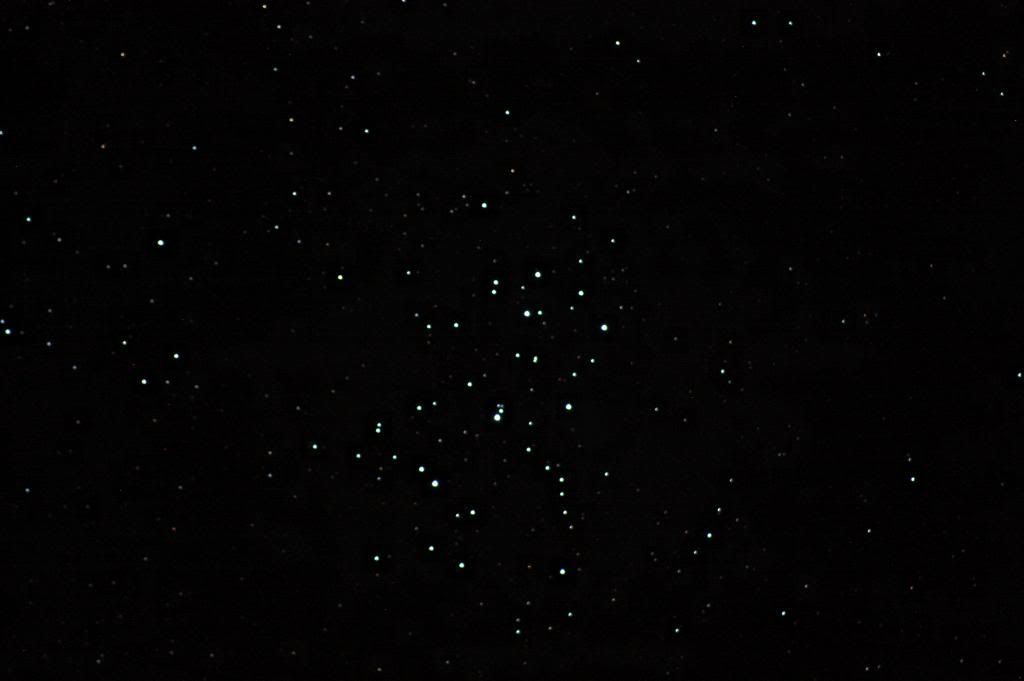
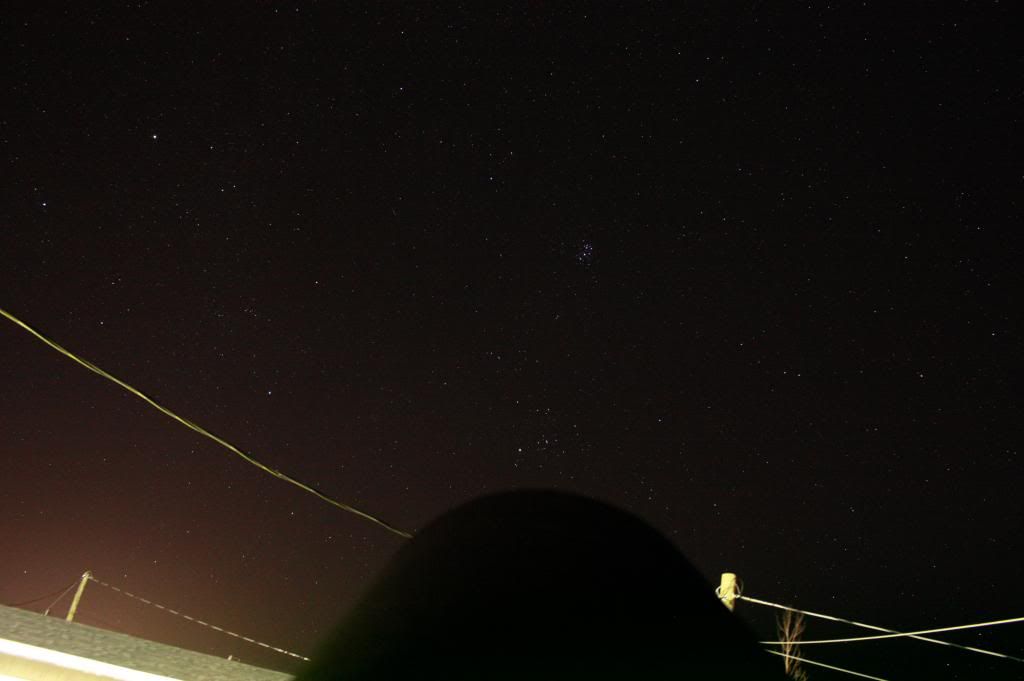
At around 1900 hrs, to the east Taurus was starting to rise with M 45 above it.  Imaged M 45 in a closeup with the camera and 300 mm lens.  Then took a larger field of view image with the 18-55 mm lens, showing all of Taurus and M 45.

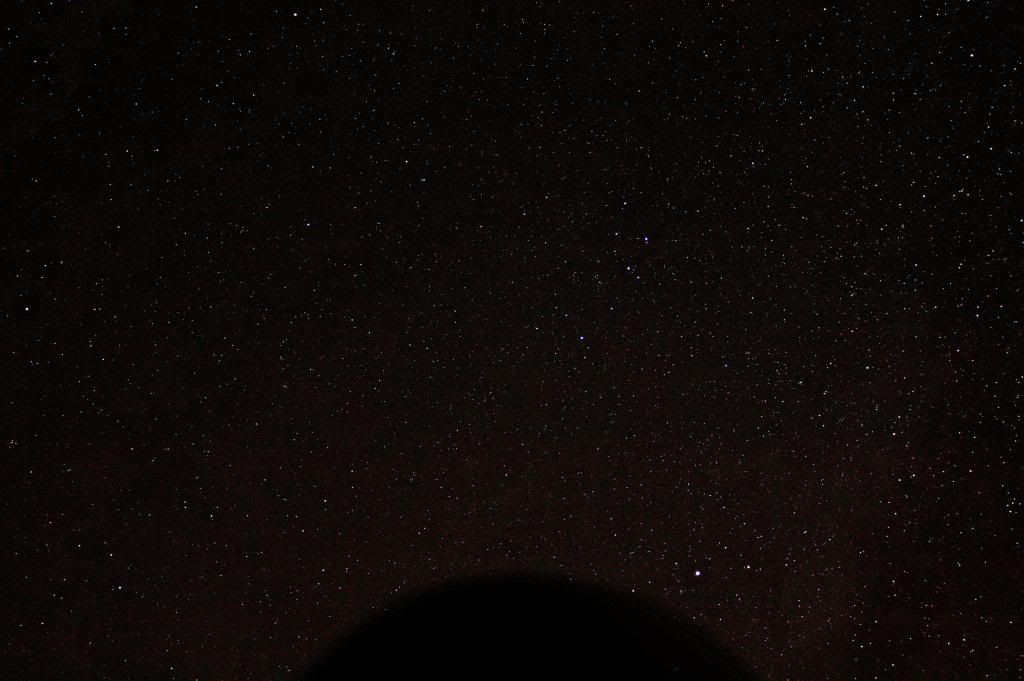
After this, the telescope was pointed west, towards Delphinus and Altair.  This direction is interesting, because there was a super nova in Delphinus earlier this year, in the summer time.

One faint shooting star was seen in the SW high.  No Satellites were seen.

Delphinus and Altair

Venus image taken with planetary imager attached to eyepiece of telescope

Venus image taken with DSLR camera attached to eyepiece of telescope

M45 image taken with DSLR and 300mm lens attached to telescope

M45 and Taurus

Sunday, November 17, 2013

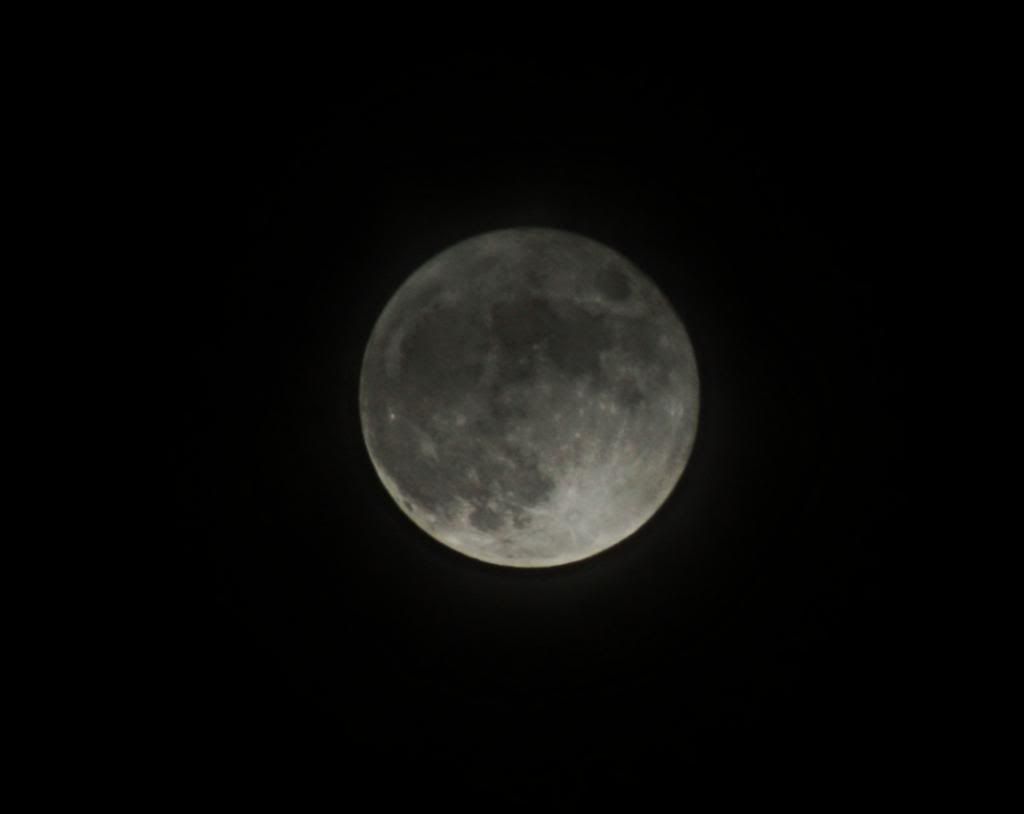
FULL BEAVER MOON

Location:  Little Lepreau, New Brunswick, Canada

Date Time:  November 17, 2013 2020 hrs Atlantic Standard Time

Weather:  4 degrees Celsius, no wind, slight breeze on the ground, windy higher up in the sky, very cloudy to partly cloudy.  Big wind and rain storm is in forecast for tomorrow morning.  Possibly 90 kph winds

Wednesday, November 13, 2013

SEARCH FOR COMET ISON

Location:  Little Lepreau, NB, Canada

Date Time:  Nov 13/13 0400-0530 hrs

Weather:  -5 degrees Celsius, clear, light breeze

Attendance:  Myself

Equipment:  20x80 Binoculars, tripod

Objective:  To locate and view comet ISON.

Report:  It has been reported on spaceweather.com and astronomy.com in the last couple of days that comet ISON has now approached magnitude 8.  This should make ISON visible with binoculars...in theory. As the weather was calling for clear skies this morning(its been cloudy and rainy here for at least a week), it was decided to get up for an early morning observing session to try to locate and view ISON.

After getting up at 0400, went out for quick look to see what the sky and weather were doing.  It was cold, but clear, with almost no wind at the time.  Stars were shining brightly.  Easily picked out Leo, part way up in the sky in the east.  Looked for Leo because Regulus and Mars are in Leo and are a great jumping off pair to find ISON.  Could not find ISON at this time with naked eye.  Went in to access an on-line star chart to get a better idea of where ISON was located in the sky, exactly.  A couple of weeks ago, it was right next to Mars, which was close to Regulus, a bright star in Leo.  At this time ISON is moving very quickly almost straight at the Sun, so not surprisingly, it is moving from constellation Leo to the one that is below it in the morning.

After setting up the computer, and trying to log on to my star chart, for some reason the star chart would not load, although everything else loaded, all be it extremely slowly.  So, in effect, there was no star chart to help tell what was where.

Went out with the tripod mounted 20x80 binoculars at 0500 hrs and searched the eastern sky for ISON. Easily located Leo, then found Mars.  The comet was suppose to be almost on a straight line from Regulus to Mars to ISON.  ISON being equidistant to the distance from Mars to Regulus, approximately.  There was no confirmed sighting of ISON by this observer on this morning, although there were bright stars in the area where ISON was suppose to be, no tail or anything that would be set one star out from the other could be seen.

Observed Ursa Major(The Big Dipper) standing on end in the NE, Cassiopeia in the NW, Jupiter almost straight up to the SW, M45 low in the west and Orion in the SW.

No shooting stars or satellites were observed on this morning and did not confirm Mercury which was suppose to rise at around 0530 hrs.


Saturday, November 9, 2013

FLORIDA BIRD SIGHTED IN NEW BRUNSWICK

Was talking on the phone about 5pm on Nov 7 when I noticed this bird walking on our front lawn.  Wasn't sure what the official name of this kind of bird was, but did recognize it from my trips to Florida.  I've never seen this bird north of Florida, but after doing some Google research, found out that its called a Snowy Egret and its range is from Florida to Virginia.

There were strong southerly winds for about 3 days which probably explains its presence.  It sometimes happens that southern birds and sea creatures will venture north when warm winds and ocean currents blow north.

Just as a point of interest...While driving home from St George on Nov4 at around 4pm at around Penfield, NB, three of us witnessed an genuine 'Black Cat' eastern cougar on the road in front of us.  It ran down the road about 100 yards ahead of us for about a solid minute before hoping into a thicket.  Sadly I didn't get a picture, because I thought it was a dog until I seen it hop sideways into the woods.


Sunday, November 3, 2013

PARTIAL SOLAR ECLIPSE 2013

Location:  Little Lepreau, NB, Canada

Date Time:  November 3, 2013 0500-0830 hrs

Weather:  Light to heavy snow, thick clouds started to break up at 0730 hrs.  Gusty, light to moderate winds blowing to the west.  Temperature stayed about the same at a little above 0 degrees Celsius.

Equipment:  None

Attendance:  Myself

Objective:  To view and image the partial solar eclipse through the 8" Meade LX 200 solar filtered telescope.

Report:  After hearing Curt's talk last night at the monthly Saint John Astronomy Clubs monthly meeting, detailing the sun rise to 0814 hrs partial solar eclipse, this observer got up at approximately 0500 hrs to get ready for this phenomenon. As the Comet ISON and 3 other comets rise in the east with Mars in Leo, just before sunrise, it was going to be an excellent morning for observing.

As it were, at 0500 hrs it was lightly snowing with solid clouds covering the stars.  Between 5 and 6 the snow got heavier, then suddenly stopped.  The website Intellicast was utilized to view the satellite images of the cloud situation for our area.  It showed a solid line of clouds moving across the whole east coast, moving from SW to NE with the closest clear skies in Northern NB somewhere south of Edmonston stretching up to the St Lawrence Seaway.

At this time it was decided to not make a relocating attempt to achieve the objective.  Simply too far, in fact it was impossible to drive that far before sun rise which was about 0700.

Just after sunrise, the clouds started to break up, ever so slightly.  By 0750 there was a thin patch of blue sky showing to the NE.  The Sun actually peaked from behind the clouds at 0822 hrs.  By 0900 it was a beautiful, almost clear morning with a very slight breeze.

This partial solar eclipse could not be observed from this location.  Maybe next time

Notes:  No shooting stars or satellite or stars were observed during this session.  Daylight Savings Time ended at 0200 hrs.  The extra hour in the morning was very nice to have for a change.

Wednesday, October 30, 2013

SAGITTARIUS

Location:  Little Lepreau, New Brunswick

Date Time:  October 29, 2013 1930-2000 hrs/ October 30, 2013 0600 hrs

Weather:  -2 degrees Celsius, clear, no wind and frosty in the evening.  -5 degrees Celsius, clear, no wind and very frosty in the morning.

Equipment:  Canon DSLR camera and tripod

Attendance:  Myself

Evening Report:  While out in the front yard on the evening of  the 29th, checked on the sky situation and noticed almost perfect conditions.  Venus stood out brilliantly  in the SW sky right next to Sagittarius and the Milky way.

Viewing Sagittarius is kind of special, because it is primarily a summer constellation that goes down quickly in the fall evenings and is not view-able for most of the winter.   It is also a noteworthy constellation because of it is located in the same direction as the center of our galaxy, the Milky Way.  This is an interesting area of our sky, because there is so much going on in this direction.  The center of our galaxy is thought to contain a massive black hole that causes all the stars and interstellar gases and matter to circle it because of its enormous mass.  Like water circling a drain, the closer you get to the center of the whirlpool, the faster things are happening and, in the case of a galaxy, the more stars, globular clusters, gas and materials that exist in a relatively small area of the sky.  This makes it so that there is more for the amateur astronomer to see.

While imaging Sagittarius, the lens and camera fogged up, do to either frost or dew.  This happened very fast.  After only two images the lens was completely fogged over, which perhaps accounts for the less than perfect focus in the image.

In the image, the Lagoon Nebula, also known as M8 was clearly visible to the west of Sagittarius and to the SE of Venus.

Delphinus and Sagitta were observed with naked eye, high over-head to the SSE.  The super nova star, which flared up in the middle of the summer, in the constellation Delphinus with Sagitta the arrow pointing straight at it, was not visible.  Note:  Delphinus is yet another constellation of stars which loosely resembles a dipper.

Cassiopeia was observed high in the NE.

Morning Report:  In the morning, a quick observation, looking for comet ISON was done.  A crescent Moon was low in the East right next to Mars.  Of course, the comet was not visible to this observer, as it is still too faint see naked eye.  Its important to keep viewing this comet, because it could flair up at any time and become a naked-eye comet.  It would be amazing to be among the first to see it, naked eye.

As usual, my favorite constellation, Orion was observed midway up in the sky in the SW.

The Big Dipper was also observed, standing on end, high in the NE.

No satelites or shooting stars were observed, neither in the evening or in the morning.
Sagittarius and Venus low in SW at 1950 hrs.  Canon DSLR and 18-55mm lens 30 second shutter speed, 1600 ISO

Followers

Blog Archive